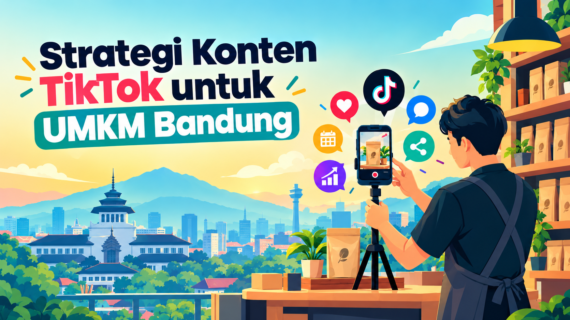
TikTok Content Strategy for Small Businesses in Bandung: A Guide from Scratch

TikTok Content Strategy for Small Businesses in Bandung: A Guide from Scratch

A solid TikTok content strategy for small businesses can put your brand in front of thousands of people without a big ad budget. Yet many owners in Bandung post regularly and still get almost no views. Usually, the problem is not the camera or the editing. The problem is that the content has no clear direction.

This guide covers the first steps, content pillars, video ideas by business type, a posting schedule, and how to read your results. By the end, you can plan content that is consistent and measurable.

Why a TikTok Content Strategy Matters for Small Businesses

TikTok offers organic reach, even for new accounts. The entry cost is also low, because a smartphone and a clear idea are enough to start.

In addition, Bandung has many food, fashion, and creative businesses that translate well into short videos. TikTok Shop also lets you sell directly from your content. As a result, a small business that stays consistent can compete with much larger brands.

What to Do Before You Create Content

Before you start filming, set up the basics. These three steps will save you time later.

Define Your Target Audience

Write down who your buyers are. Note their age, interests, and location. For example, a café near a campus should make content for students, not for families.

Clean Up Your Profile

Choose a memorable account name and a clear profile photo. Then write a short bio that explains your product and location. Finally, add a link to your store or business WhatsApp.

Set One Content Goal

Pick a single main goal for your first three months. It could be awareness, store traffic, or direct sales. A clear goal tells you which videos are worth repeating.

4 Pillars of a TikTok Content Strategy for Small Businesses

Content pillars keep you from running out of ideas. Every video should fit into one of these four pillars.

1. Education

Share tips, tutorials, or facts about your product. For instance, show how to care for leather shoes or how to choose coffee that fits your taste.

2. Entertainment

Make light, relatable content, such as funny moments at your shop. Videos like this are easy to share, so they tend to travel further.

3. Social Proof

Show testimonials, customer reviews, or unboxing moments. Buyers trust other customers more than they trust a seller’s claims.

4. Sales

Show promos, product demos, and clear calls to buy. To keep your account from feeling like a constant ad, use a simple ratio: three non-sales posts for every sales post.

TikTok Content Ideas by Business Type

Here are ideas you can try right away.

  • Food and cafés: behind-the-kitchen footage, menu recommendations, and ASMR food clips.
  • Fashion and local brands: one item styled three ways, production behind the scenes, and thrift hauls.
  • Services and creative work: before-and-after results, short case studies, and quick tips.
  • Home-made products: packing process, the founder’s story, and answers to customer questions.

Moreover, use what makes Bandung unique, such as the city’s atmosphere, popular hangout spots, or seasonal moments. Local content often feels closer to nearby viewers.

Posting Schedule and Production Workflow

Consistency matters more than posting too often. Choose a realistic pace, such as three to five videos per week.

To keep production light, use batching. Film once for several videos, then edit and schedule them. Here is a sample weekly content calendar.

Day Pillar Example content
Monday Education A short product tip
Wednesday Social proof A customer testimonial or unboxing
Friday Entertainment A trend that fits your brand
Saturday Sales A product demo and weekend promo

Video Techniques That Keep Viewers Watching

A good video holds attention until the end. Therefore, focus on these four things.

  • A 3-second hook: open with a question, the final result, or a surprising statement.
  • On-screen text and captions: many people watch with the sound off.
  • Audio: choose trending music or sounds that match your brand’s character.
  • A call to action at the end: ask viewers to save, share, or visit your store.

How to Measure Your TikTok Results

Do not look only at view counts. Also track watch time, completion rate, shares, saves, and profile clicks. These numbers show whether your content truly resonates.

Open TikTok Analytics to compare each video’s performance. Then repeat the formats that work and drop the ones that keep failing after a few tests.

Common TikTok Mistakes Small Businesses Make

These mistakes often hold accounts back.

  • Selling too hard, too often.
  • Posting inconsistently.
  • Ignoring customer comments.
  • Chasing trends that do not fit the business.

When a Small Business Needs an Agency

Managing content yourself works well at the start. However, some signs show it is time to get help. For example, operations take all your time, your content has stalled, or you want to expand into live streaming and affiliate programs.

In that case, an agency can handle strategy and production. If you are looking for a partner, read our guide to choosing a digital marketing agency in Bandung. Our team also offers content creation, TikTok Shop live streaming, and affiliate marketing programs.

Conclusion

An effective TikTok content strategy for small businesses starts with a clear audience, content pillars, and a realistic schedule. Next, measure your results regularly and improve based on the data. Consistency will help your account grow slowly but steadily.

Want an experienced team to run your business’s TikTok? Book a consultation with Upscale House Project and tell us about your goals.
AI Can Build Its Own Landing Page, So Do You Still Need a Developer?

AI Can Build Its Own Landing Page, So Do You Still Need a Developer?

There’s been a lot of buzz lately about AI building products on its own. Roblox just launched a feature called “Build” that lets anyone create a game straight from their phone, no coding needed. Samsung is also pushing Galaxy AI hard for everyday productivity tasks.

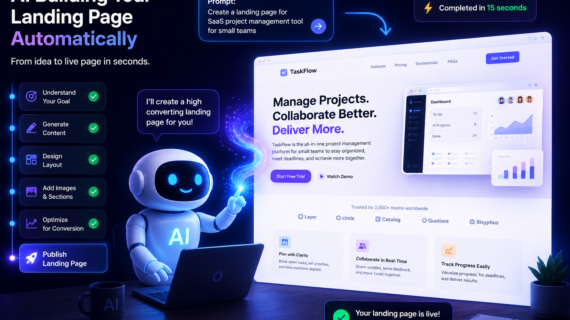
That trend has spilled over into websites too. These days, AI building landing pages isn’t unusual at all. Plenty of new tools promise instant results from a single text prompt.

So here’s the question: if AI building landing pages is that easy, do businesses still need a human developer? The answer is yes, and the reasons are pretty clear.

AI Speeds Things Up, But It Doesn’t Understand Your Business Yet

Generative AI is genuinely fast. It can produce draft copy, a basic layout, or several design variations in seconds. But a landing page that actually converts visitors into customers needs more than a good-looking layout.

There’s business logic behind every element. How the funnel is structured so visitors don’t get confused. How conversion tracking gets set up through Meta Pixel or GA4. How loading speed stays fast through a CDN like Cloudflare.

All of that works together toward one goal: real results. Unfortunately, AI can’t read that kind of business context yet. It also can’t adjust marketing strategy for a specific audience.

So when AI builds a landing page, what you get is usually just a starting skeleton. A human developer is still needed to refine it and align it with actual business goals.

Where AI Genuinely Helps

That said, AI still brings real value. A few things have already proven to speed up a landing page developer’s day-to-day work.

Initial content drafts. AI can put together a copywriting outline quickly. Developers or marketing teams just need to polish it to match the brand voice.

Workflow automation. Tools like N8N let forms, CRMs, and chatbots connect automatically. The process runs without rewriting code every time a business process changes.

AI chatbots for first response. A chatbot can answer basic visitor questions around the clock. The sales team only steps in once questions get more specific.

With this combination, work gets more efficient. AI handles the repetitive stuff, while people focus on strategy and fine-tuning.

The Risk of Relying on AI Too Much

The biggest temptation with the AI-building-landing-pages trend is assuming everything becomes instant and risk-free. In reality, that’s not always true.

Generative AI output often still needs a second look. That covers security, speed, and SEO compliance. Skip that audit, and new problems usually show up later.

Take a website built fast with no technical optimization. It looks fine at first. But after a few months, search rankings can drop and conversion performance can weaken.

AI also tends to produce content that feels generic. It looks polished, but it can feel impersonal. Yet a potential customer’s trust often comes from small, human details.

That’s why AI output should always get a second review from an experienced developer. Not to reject AI, but to make sure the result is actually good enough to use.

How Businesses Can Use This Trend Wisely

To avoid missteps, there are a few safe ways to approach the AI-building-landing-pages trend. This approach works for small businesses and large companies alike.

First, treat AI as a starting point, not the final product. Let AI draft the first version, then hand it to a developer for refinement.

Second, keep running regular technical audits. Check loading speed, security, and SEO structure every few months.

Third, keep a human touch in the content. Match the tone to the brand’s character so it doesn’t feel stiff or generic.

Fourth, use automation only for repetitive tasks. Let developers focus on strategy, not on work a machine can already handle.

This way, businesses get the speed of AI without losing quality. The result: a landing page that stays effective and still feels personal.

When You Should Still Use a Full Developer

There are situations where AI building landing pages on its own isn’t a good idea. It’s worth knowing these before rushing into fully automated tools.

First, when the landing page connects to payment systems or customer data. Security becomes the top priority, and a small gap can cause big damage.

Second, when the campaign needs detailed tracking. Wrong conversion data can lead to bad marketing decisions. An experienced developer is usually quicker to catch these mistakes.

Third, when the brand has a distinct visual identity. AI tends to produce generic designs that look similar to each other. But a landing page that stands out is usually the one that looks different.

Fourth, when the business needs solid performance across devices. Developers can test and fix the layout across many screen sizes. AI doesn’t always catch details this small consistently.

If any of these apply, it’s best to bring in a developer from the start, not just for cleanup at the end.

Frequently Asked Questions

Can AI building landing pages be used without a developer at all?

It can, but the risk is high. AI’s first output is usually just a basic skeleton. Without a developer’s adjustments, important pieces like conversion tracking or loading speed often get missed.

Is AI building landing pages cheaper than hiring a developer?

It looks cheaper at first. But the cost of fixing problems later is often higher, especially if issues only surface after traffic starts coming in.

What AI tools work well alongside a developer’s work?

Common tools include AI for content drafts, N8N for workflow automation, and AI chatbots for first responses. All three speed up the process, while a developer still oversees the final result.

Will this trend replace landing page developers?

Probably not entirely. The developer’s role is shifting, from building everything from scratch to refining and overseeing AI output. Strategy and technical audit skills are becoming even more valuable.

Conclusion

The AI-building-landing-pages trend is worth following. Its speed is a real advantage, especially for businesses that need quick results.

But speed alone isn’t enough. A landing page that actually works needs strategy, technical audits, and a human touch that AI can’t fully replace.

So this moment is actually a good opportunity. Businesses can combine the speed of AI with the precision of an experienced developer. The result isn’t just a landing page that gets built fast, it’s one that actually works for the business’s goals.

5 Reasons Your Meta Ads Are Burning Budget Without Results

5 Reasons Your Meta Ads Are Burning Budget Without Results

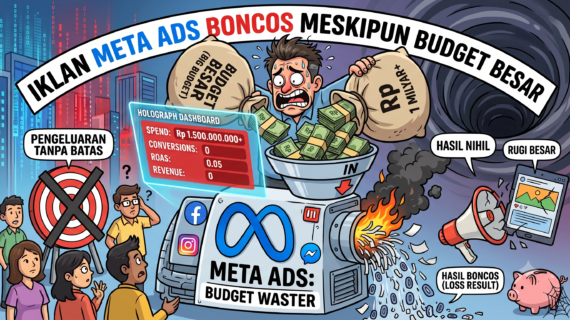
Poured millions into Facebook and Instagram ads, yet the results barely move the needle? You’re not alone. Many business owners think raising the budget is the “safe” fix, but conversions stay flat, and cost per result keeps climbing month after month.

The usual reaction is to add more budget, switch agencies, or give up on Meta Ads entirely. But before making a drastic call, it’s worth checking the fundamentals first. More often than not, the problem isn’t the budget number, it’s one of these five technical and strategic gaps that get overlooked.

1. Targeting That’s Too Broad (or Too Narrow)

Many assume “the wider the audience, the more sales.” But an ad aimed at everyone usually reaches no one effectively. Meta’s algorithm needs clear signals about who your target is so it can optimize properly and find the people most likely to convert.

If your audience is too generic — say, “women, 18-45, nationwide” — the system struggles to tell apart genuine prospects from people just scrolling past. The ad still runs, the budget still gets spent, but the results don’t add up.

On the flip side, targeting that’s too narrow has its own problem. The available audience pool becomes too small, forcing the system to “compete” for the same people over and over. Cost per result climbs as competition within that tiny audience intensifies over time.

The fix: start with an audience specific enough based on interests, behavior, or existing customer data (like a custom audience from your database), then let the algorithm learn and optimize from early conversion data. Don’t rush to change targeting before enough data comes in.

2. Landing Page Doesn’t Match the Ad

This is the most commonly overlooked issue, yet it has a huge impact. People click an ad because they’re drawn to a specific message or offer — say, a 30% discount or a free consultation. But once they land on the page, the message is different, it loads slowly, or it’s unclear what to do next.

Imagine clicking a promo ad, only to land on a generic homepage with no mention of the promo at all. The trust built up by the ad collapses within seconds.

The result: prospects who were interested moments ago bounce before they ever check out or fill out a form. Meta did its job, driving relevant traffic, but the ad budget ends up wasted because the landing page fails to “catch” that interest.

An effective landing page should continue the ad’s message (message match), load fast on mobile since most traffic comes from phones, and have one clear call-to-action so visitors aren’t left guessing what to click.

3. No Data to Optimize With (Pixel Not Set Up Correctly)

Meta Ads works like a machine that gets smarter the more accurate data it’s fed. But if the Meta Pixel or Conversion API isn’t set up correctly, the algorithm runs blind, unable to tell which ads actually drive sales and which ones just generate empty clicks.

This problem often goes unnoticed on the surface. Campaigns keep running, reports keep coming in, but the recorded conversion numbers don’t match what’s actually happening on the website. Sometimes key events like “Purchase” or “Add to Cart” fire twice, or don’t fire at all due to conflicts with another plugin on the site.

As a result, budget keeps getting allocated toward audiences and ads that aren’t actually effective, because the system has no accurate signal to learn from. The longer this goes unnoticed, the further off-track the algorithm’s optimization becomes.

Double-check your pixel setup regularly using Meta Pixel Helper or Events Manager, and make sure key events are recorded correctly and only once per action.

4. The Same Ad Creative, Over and Over

Running the same ad for weeks makes the audience “tired of seeing it” — known as ad fatigue. Performance that was strong initially gradually declines even though budget and targeting haven’t changed, simply because people have seen the same ad too many times in their feed.

The telltale sign is usually a rising frequency paired with a dropping click-through rate (CTR). That’s a signal your creative has gone “stale” in the eyes of the audience, even if from your side the campaign only just launched a few weeks ago.

Beyond visual fatigue, if every creative is pure hard-sell without varying the angle — like a banner that just says “50% Off, buy now” — prospects who aren’t ready to buy yet will simply scroll past. Not everyone who sees an ad is at the buying-ready stage.

Prepare several creative variations with different angles such as educational content, customer testimonials, or before-and-after comparisons, and rotate them regularly to keep the ads fresh in front of your audience.

5. Not Giving the Algorithm Time to Learn

Constantly tweaking campaigns, budgets, or audiences every 1-2 days because “there are no results yet” actually forces Meta’s algorithm to keep restarting from zero. This is known as exiting the learning phase, and the campaign has to gather data all over again.

This is one of the most common mistakes, especially for those new to Meta Ads who panic seeing underwhelming results on day one or two. In reality, the algorithm needs time and a certain volume of data, typically around 50 conversion results within a week, to find the pattern of audiences most likely to convert.

Every major change, like a drastic budget shift, an audience edit, or swapping the main creative, resets the learning phase to zero. If this happens repeatedly before the campaign has a chance to stabilize, performance will never truly reach its optimal point.

Give campaigns at least a few days before judging performance, and avoid drastic changes while still in the learning phase. If a change is necessary, make it gradually rather than all at once.

So, It’s Not Just About Budget

A large budget without the right foundation, targeting, landing page, tracking, creative, and patience with the algorithm, will only burn money faster without matching results. What usually needs fixing isn’t “add more budget,” but “plug the leaks” across these five areas first.

Before rushing to increase next month’s budget, try auditing these five points one by one. The issue might be just one small spot, but its impact can ripple across the entire campaign’s performance.

Need help auditing or setting up more effective Meta Ads? Our team is ready to help, from the technical setup to the creative strategy.

Copyright © 2026 Upscale House Project