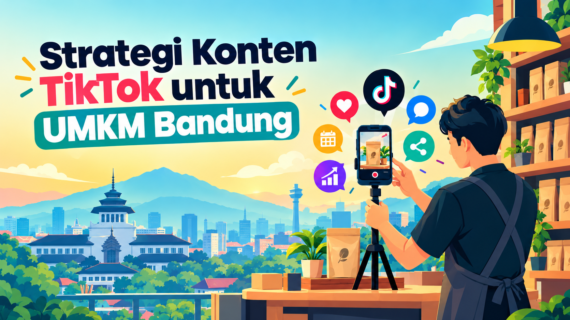
TikTok Content Strategy for Small Businesses in Bandung: A Guide from Scratch

TikTok Content Strategy for Small Businesses in Bandung: A Guide from Scratch

A solid TikTok content strategy for small businesses can put your brand in front of thousands of people without a big ad budget. Yet many owners in Bandung post regularly and still get almost no views. Usually, the problem is not the camera or the editing. The problem is that the content has no clear direction.

This guide covers the first steps, content pillars, video ideas by business type, a posting schedule, and how to read your results. By the end, you can plan content that is consistent and measurable.

Why a TikTok Content Strategy Matters for Small Businesses

TikTok offers organic reach, even for new accounts. The entry cost is also low, because a smartphone and a clear idea are enough to start.

In addition, Bandung has many food, fashion, and creative businesses that translate well into short videos. TikTok Shop also lets you sell directly from your content. As a result, a small business that stays consistent can compete with much larger brands.

What to Do Before You Create Content

Before you start filming, set up the basics. These three steps will save you time later.

Define Your Target Audience

Write down who your buyers are. Note their age, interests, and location. For example, a café near a campus should make content for students, not for families.

Clean Up Your Profile

Choose a memorable account name and a clear profile photo. Then write a short bio that explains your product and location. Finally, add a link to your store or business WhatsApp.

Set One Content Goal

Pick a single main goal for your first three months. It could be awareness, store traffic, or direct sales. A clear goal tells you which videos are worth repeating.

4 Pillars of a TikTok Content Strategy for Small Businesses

Content pillars keep you from running out of ideas. Every video should fit into one of these four pillars.

1. Education

Share tips, tutorials, or facts about your product. For instance, show how to care for leather shoes or how to choose coffee that fits your taste.

2. Entertainment

Make light, relatable content, such as funny moments at your shop. Videos like this are easy to share, so they tend to travel further.

3. Social Proof

Show testimonials, customer reviews, or unboxing moments. Buyers trust other customers more than they trust a seller’s claims.

4. Sales

Show promos, product demos, and clear calls to buy. To keep your account from feeling like a constant ad, use a simple ratio: three non-sales posts for every sales post.

TikTok Content Ideas by Business Type

Here are ideas you can try right away.

  • Food and cafés: behind-the-kitchen footage, menu recommendations, and ASMR food clips.
  • Fashion and local brands: one item styled three ways, production behind the scenes, and thrift hauls.
  • Services and creative work: before-and-after results, short case studies, and quick tips.
  • Home-made products: packing process, the founder’s story, and answers to customer questions.

Moreover, use what makes Bandung unique, such as the city’s atmosphere, popular hangout spots, or seasonal moments. Local content often feels closer to nearby viewers.

Posting Schedule and Production Workflow

Consistency matters more than posting too often. Choose a realistic pace, such as three to five videos per week.

To keep production light, use batching. Film once for several videos, then edit and schedule them. Here is a sample weekly content calendar.

Day Pillar Example content
Monday Education A short product tip
Wednesday Social proof A customer testimonial or unboxing
Friday Entertainment A trend that fits your brand
Saturday Sales A product demo and weekend promo

Video Techniques That Keep Viewers Watching

A good video holds attention until the end. Therefore, focus on these four things.

  • A 3-second hook: open with a question, the final result, or a surprising statement.
  • On-screen text and captions: many people watch with the sound off.
  • Audio: choose trending music or sounds that match your brand’s character.
  • A call to action at the end: ask viewers to save, share, or visit your store.

How to Measure Your TikTok Results

Do not look only at view counts. Also track watch time, completion rate, shares, saves, and profile clicks. These numbers show whether your content truly resonates.

Open TikTok Analytics to compare each video’s performance. Then repeat the formats that work and drop the ones that keep failing after a few tests.

Common TikTok Mistakes Small Businesses Make

These mistakes often hold accounts back.

  • Selling too hard, too often.
  • Posting inconsistently.
  • Ignoring customer comments.
  • Chasing trends that do not fit the business.

When a Small Business Needs an Agency

Managing content yourself works well at the start. However, some signs show it is time to get help. For example, operations take all your time, your content has stalled, or you want to expand into live streaming and affiliate programs.

In that case, an agency can handle strategy and production. If you are looking for a partner, read our guide to choosing a digital marketing agency in Bandung. Our team also offers content creation, TikTok Shop live streaming, and affiliate marketing programs.

Conclusion

An effective TikTok content strategy for small businesses starts with a clear audience, content pillars, and a realistic schedule. Next, measure your results regularly and improve based on the data. Consistency will help your account grow slowly but steadily.

Want an experienced team to run your business’s TikTok? Book a consultation with Upscale House Project and tell us about your goals.
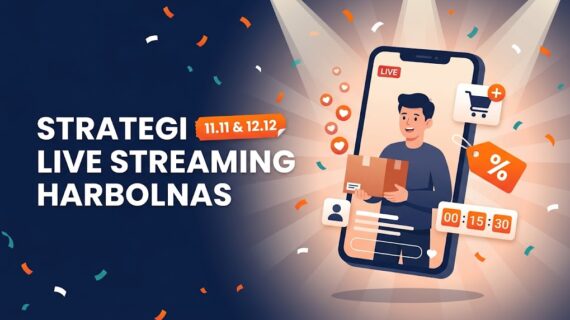
Harbolnas Live Streaming Strategy for 11.11 and 12.12: How to Boost Sales

Harbolnas Live Streaming Strategy for 11.11 and 12.12: How to Boost Sales

A solid Harbolnas live streaming strategy separates brands that merely join the discount rush from brands that actually capture sales. During 11.11 and 12.12, millions of shoppers are ready to buy. The question is whether they watch your brand or your competitor’s. This guide covers preparation, scheduling, scripts, and measuring results.

Why Live Streaming Works During Harbolnas

Harbolnas shoppers already intend to buy. What they need is a reason to pick your product among thousands. Live streaming provides it in three ways: products are demonstrated in real time, questions are answered on the spot, and time-limited promos create urgency.

Note the difference between the two events. 11.11 is dominated by competition on marketplaces and social commerce platforms, while 12.12 is the Harbolnas moment where many brands push big offers. Tailor your live strategy to both.

Preparation: 4-6 Weeks Before the Event

Set measurable targets

Define your revenue target, number of orders, number of live sessions, and duration per session. Clear targets make evaluation easier.

Prepare stock and logistics

A busy live with empty stock is a double loss. Forecast sales, keep buffer inventory, and make sure your warehouse and courier partners can handle the surge.

Design attractive offers

Combine promo types: bundles, hourly flash sales, live-only vouchers, and gifts for early buyers. Check your margins first so discounts don’t erase your profit.

Prepare your team and equipment

At minimum, have one host, one operator, and one comment moderator. Ensure stable internet, good lighting, and clear audio. Run a test live before the big day.

Building the Live Schedule and Rundown

Split your live activity into three phases:

  1. Warm-up (1-2 weeks before): light lives and teasers to build an audience and followers.
  2. Peak live (event day): long or multiple sessions with your strongest promos during busy hours.
  3. Wrap-up (day +1 to +2): remaining stock, last offers, and reaching shoppers who missed out.

Within each session, keep a rhythm: greeting and promo teaser, main product demo, Q&A break, then a flash sale. Repeat the cycle so new viewers always get context.

A Live Script That Turns Viewers into Buyers

A script isn’t meant to be read stiffly; it’s a framework so your host never loses direction. An effective structure:

  • Opening: greet viewers and say what they’ll get during the live.
  • Product demo: show real benefits, not just features.
  • Urgency: state deadlines or stock limits honestly.
  • Handle objections: answer common doubts about quality, size, or warranty.
  • Call to action: guide viewers step by step to the cart or checkout.

Running Live on TikTok Shop and Shopee Live

On TikTok Shop, the strength is content reach. Use short videos as teasers so new audiences discover your live. On Shopee Live, viewers are already in a shopping mindset, so focus on vouchers, special prices, and checkout speed. Adapt your host’s style to each platform.

Support Your Live with Ads and Affiliates

A great live still needs viewers. Use ads to drive traffic to your session, and activate affiliate creators before the event so they promote your live schedule. Learn how in [TikTok and Shopee Affiliate Program].

Common Mistakes Brands Make During Harbolnas Lives

  • Stock doesn’t match forecasts, so bestsellers sell out fast.
  • Hosts are unprepared or don’t know the product well.
  • Deep discounts without margin calculations.
  • No moderator, so viewer comments get missed.
  • No evaluation, so the same mistakes repeat next event.

How to Measure and Evaluate Live Results

After each session, track peak viewers, average watch time, conversion rate, total sales (GMV), and ROAS if you run ads. Compare sessions to find the best time slots, products, and promos, then apply those lessons to the next session.

When to Hire a Live Streaming Service

If your in-house team lacks hosts, equipment, or experience running large-scale lives, working with an agency can save time and reduce risk. See cost estimates in [Service Cost for Brands in Indonesia] and our services at[Live Streaming page].

FAQ

When should I start preparing for a Harbolnas live?
Ideally 4-6 weeks before, so stock, team, and promos are ready.

What is the ideal live duration?
There’s no fixed number. Many brands run 2-4 hour sessions with breaks and periodic flash sales, then refine based on data.

How many people do I need for one live?
At least three: a host, an operator, and a moderator.

Conclusion

The key to a strong Harbolnas live streaming strategy is preparation, sensible offers, and clean execution. Start with targets, stock, and team, then measure results to keep improving. Need a partner for your Harbolnas live? [Schedule a Consultation]

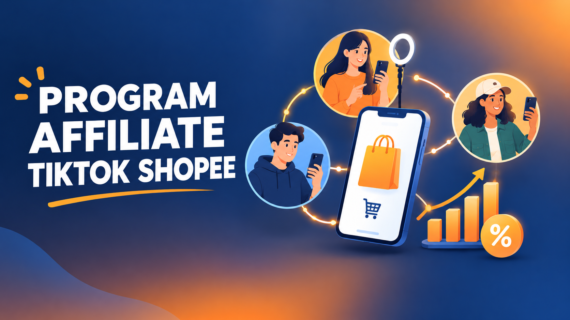
TikTok and Shopee Affiliate Program: How Brands Can Build One from Scratch

TikTok and Shopee Affiliate Program: How Brands Can Build One from Scratch

A TikTok and Shopee affiliate program is one of the most efficient ways for brands to reach large audiences without heavy upfront ad spend. Creators promote your products for a commission, so you only pay when a sale happens. Here is how to build one, step by step.

Why Should Brands Run an Affiliate Program?

Affiliate marketing gives you wide reach with controlled risk. Hundreds of creators can promote your products in their own style, and you pay commission only on completed sales. Creator content also feels more authentic than brand-made ads.

What Are the TikTok Affiliate Program (TAP) and Shopee Affiliate Program (SAP)?

TAP lets creators promote TikTok Shop products through videos and lives, earning commission on resulting sales. SAP works similarly in the Shopee ecosystem, where creators share products through affiliate links. On both platforms, sellers set product commission rates through Seller Centre.

6 Steps to Build an Affiliate Program

1. Define Your Goals and Hero Products

Pick products with healthy margins and strong visual appeal. Set clear targets, such as number of active creators or the share of GMV coming from affiliates.

2. Calculate a Realistic Commission

Use a simple formula: maximum commission = gross margin − platform fees − operating costs − target profit. Too low and creators lose interest; too high and you erode profit. Consider tiered commissions for top performers.

3. Prepare Supporting Assets

Write a short brief covering key product benefits, dos and don’ts, and sample videos. Prepare product samples and a polished store page with complete photos and descriptions.

4. Recruit Creators

Combine two approaches: open collaboration, so any creator can pick your products, and targeted collaboration, inviting creators who fit your niche. Start with micro-creators, whose audiences tend to be more engaged.

5. Track and Optimize

Review regularly: GMV per creator, conversion rate, return rate, and content quality. Reward consistent creators with better commissions or samples, and drop partnerships that don’t deliver.

6. Scale with Live Streaming and Ads

Top-performing creator content can be repurposed as ad creative. Pair it with live streaming so viewers can buy instantly.

Common Mistakes to Avoid

  • Setting commission without checking margins.
  • Sending samples without a clear brief.
  • Not reviewing creator performance regularly.
  • Relying on a single platform.

Need Help Building Your Affiliate Program?

Upscale House Project is integrated with both the TikTok Affiliate Program and the Shopee Affiliate Program. We help with commission strategy, creator recruitment, and performance reporting. Book a free consultation to discuss your brand’s affiliate program.

How to Choose a Digital Marketing Agency in Bandung: A Guide for Brands

How to Choose a Digital Marketing Agency in Bandung: A Guide for Brands

Choosing the right digital marketing agency in Bandung is not easy. There are plenty of options, the promises sound alike, and the prices vary widely. A wrong choice can burn through your ad budget with little to show for it. This guide covers the criteria to look for, the questions to ask before signing, and the red flags to avoid.

When Does Your Brand Need a Digital Marketing Agency?

Not every brand needs an agency right away. But a few signs suggest it’s time:

  • Your in-house team is overwhelmed. The same people handle content, ads, and the online store.
  • Sales have stalled. Ads are running, but results aren’t improving.
  • You want to enter live shopping or affiliate marketing. You lack the system, team, or experience to run them.
  • You need measurable results. You want clear reports, not just impressions.

If one of these sounds familiar, working with an agency is worth considering.

7 Criteria for Choosing a Digital Marketing Agency

1. Integrated Services

An agency that handles only one channel often produces a fragmented strategy. Ideally, it combines content, ads, livestreaming, affiliate, and e-commerce integration into one plan. That keeps your brand message consistent and lets data from each channel support the others.

2. Real Portfolio and Case Studies

Don’t rely on claims alone. Ask for sample campaigns, a client list, and results they have achieved. A good case study explains the goal, the strategy, and the measurable outcome.

3. Experience in Your Industry

Fashion, food, and beauty audiences behave differently. Ask whether the agency has handled similar brands and what they learned from them.

4. Transparent Reporting and Metrics

A good agency is open about numbers. Make sure you receive regular reports covering business metrics, not just surface-level ones, such as:

  • ROAS (Return on Ad Spend)
  • CPA (Cost per Acquisition)
  • Conversion rate
  • Total sales per channel

5. Clear Pricing Structure

Know exactly what the fee covers: agency fees, ad spend, content production, and any extra costs. Clear pricing from the start prevents disputes later.

6. Team Quality and Communication

You’ll work with this team over the long term. Pay attention to how fast they respond, how clearly they explain things, and whether one person is accountable for your account.

7. Location and Ease of Coordination

A local agency has practical advantages. Meetings are easier, content and livestream production can be coordinated in person, and the team understands the West Java market. That’s why many brands look for a digital marketing agency in Bandung for content and online sales.

Questions to Ask Before You Sign

Use this list in your first consultation:

  1. Which services are included in the package, and which are not?
  2. What metrics do you report, and how often?
  3. Who will handle our account day to day?
  4. Can we see case studies from brands similar to ours?
  5. What happens if campaign results fall short of the target?
  6. Who owns the ad accounts and content assets?
  7. What is the minimum contract length, and how can we terminate?
  8. What ad budget is realistic for our goals?

Specific, honest answers are a sign of an experienced agency.

Red Flags to Avoid

Be cautious if an agency shows any of these signs:

  • Guaranteed results. Ad performance depends on many factors, so a guaranteed sales promise is suspicious.
  • No case studies. Without proof of work, you’re buying a promise.
  • Vague contracts. Fees, duration, and account ownership should be in writing.
  • Opaque reporting. If data is hard to get, that’s a problem.
  • Full control of your ad accounts. You should always have access to accounts that belong to your brand.

Agency vs In-House Team vs Freelancer

Each option has trade-offs. Here is a general comparison:

Aspect Agency In-House Team Freelancer
Cost Recurring fee, no fixed salaries Fixed salaries, higher Per project, flexible
Time to start Fast Slow (hiring) Fast
Expertise Diverse skills in one team Limited to team members Limited to one skill
Scalability Easy to scale up or down Difficult Depends on availability
Best for Brands needing an integrated strategy Brands with heavy daily needs Small or specific projects

For brands that want to grow with a full strategy without building a team from scratch, an agency is often the most efficient choice.

How Much Does a Digital Marketing Agency Cost?

Agency pricing varies a lot, depending on:

  • The type and number of services (content, ads, livestreaming, and more)
  • Campaign scale and ad budget
  • Length of the partnership
  • Production needs, such as video, photo, and hosts

Some services have their own cost structure. Read our guide on the cost of live streaming services for brands in Indonesia to understand the components. For ad strategy and budget trends, see Instagram & TikTok ads trends 2026.

Conclusion

Choosing a digital marketing agency isn’t about finding the cheapest or the loudest. Look for integrated services, clear proof of work, transparent reporting, and easy communication. Use the criteria and questions above as your checklist when talking to potential partners.

Upscale House Project is a creative agency in Bandung that combines livestreaming, e-commerce, and affiliate marketing with a data-driven approach. If you’d like to discuss your brand’s needs, schedule a consultation with our team.

Live Streaming Service Cost for Brands in Indonesia

Live Streaming Service Cost for Brands in Indonesia

How much does a live streaming service cost in Indonesia? It is one of the first questions brands ask before entering live shopping. The answer depends on duration, team size, platform, and sales goals. This guide breaks down the cost components so you can plan a realistic budget.

How Much Does Live Streaming Cost?

Costs generally fall into three tiers. These figures are only rough illustrations:

  • Basic: around IDR 1.5-3 million per session, with a simple host and operator setup.
  • Standard: around IDR 3-7 million per session, with a fuller team and structured scripts.
  • Premium/event: from IDR 10 million and up, for product launches or multi-camera broadcasts.

What Drives the Price?

  1. Duration and number of sessions. Regular lives are usually cheaper per session than one-off broadcasts.
  2. Production team. Hosts, operators, producers, and chat moderators each add cost.
  3. Equipment and location. Studio, lighting, cameras, and audio affect quality.
  4. Platform. TikTok, Shopee, and Instagram each need a different approach.
  5. Content preparation. Scripts, promos, and pre-live materials are part of the price.
  6. E-commerce integration and analytics. Store setup, sales tracking, and performance reports.

Common Pricing Models

  • Per session: ideal for testing live shopping.
  • Monthly retainer: suits brands that go live regularly.
  • Fee + sales commission: shares the risk between brand and agency.

How to Choose a Live Streaming Agency

Beyond price, check for:

  • A portfolio with measurable case studies
  • A transparent cost breakdown with no hidden fees
  • The ability to integrate e-commerce and ads
  • A performance report after every session

Also, choose an agency that understands your audience, not just the cheapest one.

When Is Live Streaming Worth the Investment?

It is worth trying if your product already sells, you want faster conversions, and you can stream consistently. With a tight budget, start with a per-session package and review the results.

FAQ

Is live streaming suitable for small businesses? Yes, if you start small with clear targets.
How many sessions should I run before evaluating? About 4-8 sessions gives enough data to compare.
Does the price include ads? Usually not, so ask upfront.

Conclusion

A live streaming service cost varies widely, but once you understand its components you can pick a package that fits your goals. Want an estimate for your brand? Book a free consultation with the Upscale House Project team.

Instagram & TikTok Ads Trends 2026: What Brands Need to Know

Instagram & TikTok Ads Trends 2026: What Brands Need to Know

Ad competition on Instagram and TikTok is heating up in 2026. Here are the trends brands should apply to keep campaigns effective and cost-efficient.

1. AI-Generated Creative & Automated Personalization

Meta Advantage+ and TikTok Smart+ increasingly rely on AI to generate creative variations and target audiences automatically. Brands that supply multiple assets (video, copy, images) benefit most, since the algorithm can test combinations faster.

2. Short-Form Video Still Rules

Reels and TikTok continue to dominate watch time. 15–30 second videos with a hook in the first 2 seconds are now the standard for ads that don’t feel like ads.

3. Social Commerce & Shoppable Ads Are Maturing

Native checkout in Instagram Shop and TikTok Shop shortens the gap between “seeing an ad” and “buying.” Product catalog integration is now essential for e-commerce and small businesses.

4. Micro & Nano Influencers Gain More Traction

Higher engagement rates and lower costs are pushing brands away from mega influencers toward niche creators whose audience matches the target market.

5. Automated Bidding & Budget Optimization

Advantage+ Shopping Campaigns and TikTok Smart Performance Campaigns are increasingly relied on to reduce manual work — but clean conversion data is still essential for optimal results.

Tips to Apply This to Your Business

  • Prepare at least 5–10 creative variations per campaign
  • Focus on native vertical video, not ads that feel forced
  • Set up pixel/CAPI correctly before scaling budget
  • Test collaborations with 2–3 nano influencers before bigger investments
Live Shopping on TikTok vs Shopee vs Instagram: Which One Fits Your Brand?

Live Shopping on TikTok vs Shopee vs Instagram: Which One Fits Your Brand?

Live shopping isn’t just a trend anymore — it’s become a serious sales channel for many brands in Indonesia. The challenge is that each platform has its own audience and features, so the results can vary a lot depending on which one you choose.

In this article, we’ll compare three of the most popular live shopping platforms — Shopee Live, TikTok Live, and Instagram Live — along with a technical checklist your brand needs to cover before going live.

Why Live Shopping Matters Right Now

Research from Ipsos shows Shopee Live is the live streaming feature sellers pick most often, since it’s seen as the most helpful for boosting revenue, far ahead of TikTok Live, Tokopedia Play, and Lazada Live. This shows live shopping genuinely moves sales, not just engagement numbers.

Interestingly, each platform tends to shine in a different area. That’s why it’s worth understanding what each one does best before deciding where to focus.

Shopee Live

Shopee Live is a favorite especially among local brands and SMEs already selling on Shopee. The reason is simple: checkout happens in the same flow as the store, so buyers don’t need to jump to another app to pay.

The platform also offers seller education programs, which research rates as the most useful compared to other platforms. This makes it a solid fit for brands just starting out and looking for guidance on effective live selling.

Best for: brands or SMEs that already sell actively on Shopee and want to boost conversions from their existing store.

TikTok Live

TikTok Live stands out for reaching new audiences. The FYP algorithm can put your live session in front of viewers who’ve never heard of your brand before — something that rarely happens on other platforms.

The tradeoff is that your content needs to grab attention fast, since FYP viewers usually land there by chance. A lively, communicative host and a persuasive script are key to keeping people from scrolling away immediately.

Best for: brands aiming to build awareness with new audiences, especially younger demographics, while still selling through TikTok Shop.

Instagram Live

Instagram Live has a more personal feel than the other two. Viewers who show up are usually already following your brand, so engagement tends to be warmer and interactions feel more like chatting with a friend.

This platform isn’t ideal if your main goal is reaching a completely new audience, but it’s very effective for strengthening loyalty and driving repeat purchases from existing customers.

Best for: brands with a solid follower base that want to stay close to loyal customers while still driving sales.

Technical Checklist Before Going Live

No matter how good the platform is, poor execution will hold you back. Here’s what to check before hitting “Go Live”:

  • Stable internet connection — have a backup connection ready if possible, since a laggy stream quickly erodes viewer trust.
  • Good lighting — products need to show their true colors clearly, not too dark or overexposed.
  • Clear audio — use an external mic if budget allows, since crackling or noisy sound drives viewers away fast.
  • A prepared host — make sure the host knows the product details and has rehearsed the sales script beforehand.
  • A standby CS team — the chat box needs real-time monitoring so buyer questions get answered before their buying momentum fades.

Conclusion — One Platform, or a Combination?

There’s no single right answer for every brand. If you already have a store on Shopee, starting with Shopee Live is the safest bet. If your goal is reaching new audiences, TikTok Live is worth trying. Instagram Live works best for nurturing relationships with loyal customers.

Many brands actually succeed by running all three at once, tailoring each live session to a specific goal. If you need help running live shopping — from the technical setup to content strategy — the Upscale House Live Streaming team is ready to help, from prep to execution.

How to Partner with Affiliates & KOLs to Boost Sales

How to Partner with Affiliates & KOLs to Boost Sales

Most brand owners think the fastest way to boost sales is to increase their ad budget. But there’s another path that often gets overlooked: partnering with affiliates and KOLs (Key Opinion Leaders). The difference is simple — instead of paying upfront for the “hope” of results, you pay after a real result happens.

This article walks through how to start affiliate and KOL partnerships the right way, so your sales grow while your budget stays under control.

Why Affiliates & KOLs Can Be More Cost-Effective Than Ads

With ads, you pay for exposure — not guaranteed sales. Affiliates are different: you only pay commission when an actual transaction happens. The risk is much lower because the spend scales with results.

KOLs work a bit differently. There’s usually an upfront fee, but you gain a trust effect that’s hard to replicate through regular ads. People trust recommendations from someone they already follow far more than an obvious sponsored ad.

Combining both — affiliates for sales volume, KOLs for trust and awareness — usually delivers more stable results than relying on ads alone.

Micro vs Macro Influencers: Which Should You Choose?

This is the question that comes up most often. The answer depends on your goal.

Macro influencers (100k+ followers) are great for fast awareness. One post reaches a wide audience. But engagement rates tend to be lower, and the cost is significantly higher.

Micro influencers (10k–100k followers) usually have higher engagement because their audience is more personal and niche. For local brands or products that need more explanation, micro influencers often perform better — and cost far less.

If you’re just starting out, try working with a few micro influencers first and track which ones bring the best engagement for your product.

How to Choose the Right Affiliate/KOL Partner

Don’t just look at follower count. A few things matter more:

Check whether their audience actually matches your product. A large following that isn’t relevant just wastes budget. Also look at engagement rate — compare likes and comments to follower count, not the follower number alone.

Review their content history too. Does their style feel natural, or does it look like they take on too many inconsistent endorsements? Audiences can usually tell the difference between genuine promotion and a random paid post.

Common Commission Structures

There are a few models you can adjust based on your budget and goals:

Per-transaction commission works well for products with healthy margins, since affiliates only get paid when a sale happens through their link or code. A flat upfront fee is more common for KOLs with large reach who focus on awareness rather than direct sales. A hybrid — a small upfront fee plus per-transaction commission — is often the fairest middle ground for both sides.

Make sure your tracking system is clear from day one, whether through unique codes, dedicated links, or affiliate tracking tools, so there’s no dispute over who earns the commission.

How to Manage the Program Without It Falling Apart

Affiliate/KOL programs that run without a system usually fall apart within three months. A few things you need to set up early:

Create clear content guidelines — not a rigid script, but boundaries on what can and can’t be said about the product. Also set a consistent commission payment schedule, since late payments are the number one reason partners walk away.

Once you have a growing number of partners, you’ll need a way to track each one’s performance — who’s actually driving sales, and who’s just generating noise in the comments without converting.

Combine It with Live Streaming for Maximum Results

One of the most effective approaches right now is combining affiliates/KOLs with live streaming. A KOL brings their audience into a live session, and the closing happens right there with a special price or bundle offer. Conversion rates tend to be much higher than simply posting a product on a feed or story.

Affiliate and KOL partnerships aren’t an instant fix, but with the right system in place, they become one of the most efficient sales channels for your brand — without constantly increasing your ad spend. If you need help building an affiliate/KOL program from scratch through execution, our team at Upscale House is ready to help.

Persib Win Narrowly in the 2026 President’s Cup, But the Real Test Has Just Begun!

Persib Win Narrowly in the 2026 President’s Cup, But the Real Test Has Just Begun!

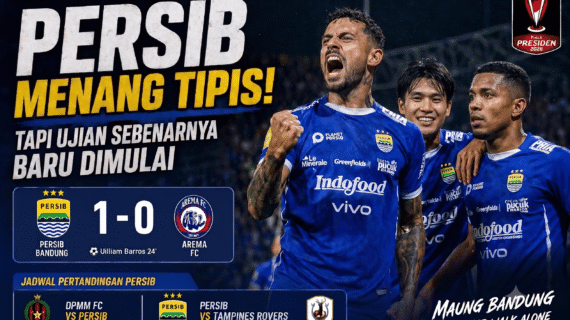
Persib Bandung made a positive start to their campaign in the 2026 President’s Cup. The Maung Bandung secured a narrow 1-0 victory over Arema FC in their opening Group A match at Si Jalak Harupat Stadium, Bandung Regency, on Saturday, July 25, 2026.

The victory gives Persib an important three points at the start of the tournament. However, with the competition in Group A still wide open, the battle to reach the next round is far from over.

Persib vs Arema FC Result in the 2026 President’s Cup

Persib Bandung defeated Arema FC 1-0 in their opening Group A match of the 2026 President’s Cup.

Uilliam Barros scored the only goal of the match in the 24th minute. His goal proved to be the difference in a closely contested game.

Persib managed to maintain their lead until the final whistle and secured three valuable points in their first match of the tournament.

The result puts Persib at the top of the Group A standings with three points.

Persib Immediately Take the Lead in Group A

The victory over Arema FC gave Persib a perfect start to their 2026 President’s Cup campaign.

The other Group A match between DPMM FC and Tampines Rovers ended in a draw, with both teams sharing one point.

As a result, Persib currently lead the Group A standings.

Latest Group A Standings in the 2026 President’s Cup

Position Team Played Points
1 Persib Bandung 1 3
2 DPMM FC 1 1
3 Tampines Rovers 1 1
4 Arema FC 1 0

Persib will be looking to maintain their position at the top of the group. However, their next two matches will be crucial in determining their chances of progressing to the next round.

Persib’s Next Fixture in the 2026 President’s Cup

After defeating Arema FC, Persib will face DPMM FC in their second Group A match.

The match is scheduled as follows:

DPMM FC vs Persib Bandung
Tuesday, July 28, 2026
7:30 PM WIB

The match will be another important test for Persib. DPMM FC previously earned one point after drawing against Tampines Rovers.

A victory would give Persib an excellent opportunity to strengthen their position at the top of Group A.

Persib’s Complete 2026 President’s Cup Schedule

Here is Persib’s schedule during the group stage of the 2026 President’s Cup:

Match Date Time
Persib vs Arema FC July 25, 2026 7:30 PM WIB
DPMM FC vs Persib July 28, 2026 7:30 PM WIB
Persib vs Tampines Rovers July 31, 2026 7:30 PM WIB

All of Persib’s Group A matches in the 2026 President’s Cup are being played at Si Jalak Harupat Stadium.

Persib Still Need to Stay Focused

Despite winning their opening match, Persib cannot afford to become complacent.

Every match in the group stage is important. The Maung Bandung still have to face DPMM FC and Tampines Rovers before their fate in the tournament is decided.

With three points already secured, Persib have made a strong start. However, the results of their next matches will play a major role in determining their final position in Group A.

A victory over DPMM FC would put Persib in a strong position to advance to the semifinals.

When Will Persib Play Again?

Persib will return to action in the 2026 President’s Cup against DPMM FC on Tuesday, July 28, 2026.

The match is scheduled to kick off at 7:30 PM WIB. Persib will then face Tampines Rovers in their final group-stage match on Friday, July 31, 2026.

Conclusion

Persib Bandung made a winning start to the 2026 President’s Cup after defeating Arema FC 1-0.

Uilliam Barros scored the winning goal to give Persib three points and temporarily move them to the top of Group A. However, the Maung Bandung’s journey in the tournament is far from over.

Persib will face DPMM FC in their next match. Another victory would significantly boost their chances of reaching the semifinals of the 2026 President’s Cup.

This article will be updated after Persib’s next match with the latest result and Group A standings.

Frequently Asked Questions

How much did Persib win against Arema FC in the 2026 President’s Cup?

Persib defeated Arema FC 1-0 in their opening Group A match of the 2026 President’s Cup.

Who scored Persib’s goal against Arema FC?

Uilliam Barros scored the winning goal for Persib.

Who will Persib face in their next match?

Persib will face DPMM FC in their second Group A match of the 2026 President’s Cup.

When will Persib play DPMM FC?

DPMM FC vs Persib is scheduled for Tuesday, July 28, 2026, at 7:30 PM WIB.

Which group is Persib in for the 2026 President’s Cup?

Persib are in Group A alongside Arema FC, DPMM FC, and Tampines Rovers.

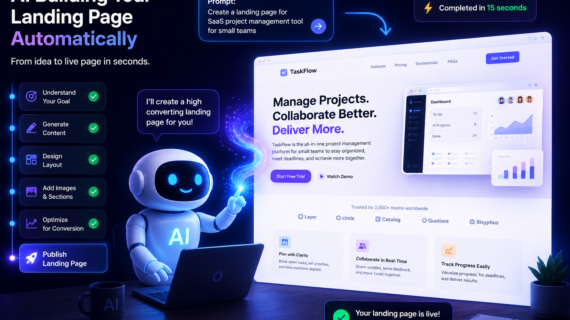
AI Can Build Its Own Landing Page, So Do You Still Need a Developer?

AI Can Build Its Own Landing Page, So Do You Still Need a Developer?

There’s been a lot of buzz lately about AI building products on its own. Roblox just launched a feature called “Build” that lets anyone create a game straight from their phone, no coding needed. Samsung is also pushing Galaxy AI hard for everyday productivity tasks.

That trend has spilled over into websites too. These days, AI building landing pages isn’t unusual at all. Plenty of new tools promise instant results from a single text prompt.

So here’s the question: if AI building landing pages is that easy, do businesses still need a human developer? The answer is yes, and the reasons are pretty clear.

AI Speeds Things Up, But It Doesn’t Understand Your Business Yet

Generative AI is genuinely fast. It can produce draft copy, a basic layout, or several design variations in seconds. But a landing page that actually converts visitors into customers needs more than a good-looking layout.

There’s business logic behind every element. How the funnel is structured so visitors don’t get confused. How conversion tracking gets set up through Meta Pixel or GA4. How loading speed stays fast through a CDN like Cloudflare.

All of that works together toward one goal: real results. Unfortunately, AI can’t read that kind of business context yet. It also can’t adjust marketing strategy for a specific audience.

So when AI builds a landing page, what you get is usually just a starting skeleton. A human developer is still needed to refine it and align it with actual business goals.

Where AI Genuinely Helps

That said, AI still brings real value. A few things have already proven to speed up a landing page developer’s day-to-day work.

Initial content drafts. AI can put together a copywriting outline quickly. Developers or marketing teams just need to polish it to match the brand voice.

Workflow automation. Tools like N8N let forms, CRMs, and chatbots connect automatically. The process runs without rewriting code every time a business process changes.

AI chatbots for first response. A chatbot can answer basic visitor questions around the clock. The sales team only steps in once questions get more specific.

With this combination, work gets more efficient. AI handles the repetitive stuff, while people focus on strategy and fine-tuning.

The Risk of Relying on AI Too Much

The biggest temptation with the AI-building-landing-pages trend is assuming everything becomes instant and risk-free. In reality, that’s not always true.

Generative AI output often still needs a second look. That covers security, speed, and SEO compliance. Skip that audit, and new problems usually show up later.

Take a website built fast with no technical optimization. It looks fine at first. But after a few months, search rankings can drop and conversion performance can weaken.

AI also tends to produce content that feels generic. It looks polished, but it can feel impersonal. Yet a potential customer’s trust often comes from small, human details.

That’s why AI output should always get a second review from an experienced developer. Not to reject AI, but to make sure the result is actually good enough to use.

How Businesses Can Use This Trend Wisely

To avoid missteps, there are a few safe ways to approach the AI-building-landing-pages trend. This approach works for small businesses and large companies alike.

First, treat AI as a starting point, not the final product. Let AI draft the first version, then hand it to a developer for refinement.

Second, keep running regular technical audits. Check loading speed, security, and SEO structure every few months.

Third, keep a human touch in the content. Match the tone to the brand’s character so it doesn’t feel stiff or generic.

Fourth, use automation only for repetitive tasks. Let developers focus on strategy, not on work a machine can already handle.

This way, businesses get the speed of AI without losing quality. The result: a landing page that stays effective and still feels personal.

When You Should Still Use a Full Developer

There are situations where AI building landing pages on its own isn’t a good idea. It’s worth knowing these before rushing into fully automated tools.

First, when the landing page connects to payment systems or customer data. Security becomes the top priority, and a small gap can cause big damage.

Second, when the campaign needs detailed tracking. Wrong conversion data can lead to bad marketing decisions. An experienced developer is usually quicker to catch these mistakes.

Third, when the brand has a distinct visual identity. AI tends to produce generic designs that look similar to each other. But a landing page that stands out is usually the one that looks different.

Fourth, when the business needs solid performance across devices. Developers can test and fix the layout across many screen sizes. AI doesn’t always catch details this small consistently.

If any of these apply, it’s best to bring in a developer from the start, not just for cleanup at the end.

Frequently Asked Questions

Can AI building landing pages be used without a developer at all?

It can, but the risk is high. AI’s first output is usually just a basic skeleton. Without a developer’s adjustments, important pieces like conversion tracking or loading speed often get missed.

Is AI building landing pages cheaper than hiring a developer?

It looks cheaper at first. But the cost of fixing problems later is often higher, especially if issues only surface after traffic starts coming in.

What AI tools work well alongside a developer’s work?

Common tools include AI for content drafts, N8N for workflow automation, and AI chatbots for first responses. All three speed up the process, while a developer still oversees the final result.

Will this trend replace landing page developers?

Probably not entirely. The developer’s role is shifting, from building everything from scratch to refining and overseeing AI output. Strategy and technical audit skills are becoming even more valuable.

Conclusion

The AI-building-landing-pages trend is worth following. Its speed is a real advantage, especially for businesses that need quick results.

But speed alone isn’t enough. A landing page that actually works needs strategy, technical audits, and a human touch that AI can’t fully replace.

So this moment is actually a good opportunity. Businesses can combine the speed of AI with the precision of an experienced developer. The result isn’t just a landing page that gets built fast, it’s one that actually works for the business’s goals.

Copyright © 2026 Upscale House Project